

What Designmode24 Interior Design Actually Means
Designmode24 interior design isn’t a fixed look like farmhouse or mid-century modern. It’s a working method built around four decisions: scale, light, material contrast, and negative space. Every room gets evaluated against those four variables before a single dollar gets spent on furniture or decor.
Most home design content tells you what looks good in a photo. Designmode24 interior design is built the other way around — it starts with how a room functions for the people who actually live in it, then lets the aesthetic follow. That distinction matters more than it sounds like it should, because a room that photographs well and a room that lives well are frequently two different rooms. designmode24, lcfmodgeeks
This guide breaks the method into something you can use this weekend: room-specific tips, real budget tiers, a rental-vs-homeowner split, and a mistakes list pulled from the most common furniture and layout errors in US homes. zillexit, endbugflow, aliensync, riproar, dowsstrike2045, nothing2hide, disbusinessfied.
The Four Principles Behind Designmode24 Interior Design
Before touching a single room, it helps to understand the framework itself. These four principles are the backbone of designmode24 interior design, and each one changes a specific, measurable thing about how a space feels.
Scale
Scale is the first filter, not an afterthought. Before buying anything, measure the room and mark the furniture footprint on the floor with painter’s tape. This sounds basic. Almost nobody actually does it, which is why so many living rooms end up with a sofa that’s either swallowing the room or floating awkwardly in the middle of it. designmode24 design
Rule of thumb: a piece of furniture should occupy no more than a third of a room’s total floor area on its own. If your sofa alone hits that mark, everything else in the room will feel cramped no matter how it’s arranged.
Light
Most American homes rely on a single overhead ceiling fixture per room, and that’s the single biggest gap in home lighting nationwide. One overhead source flattens a room and creates harsh shadows. Layering in a second or third light source changes how every other element reads.
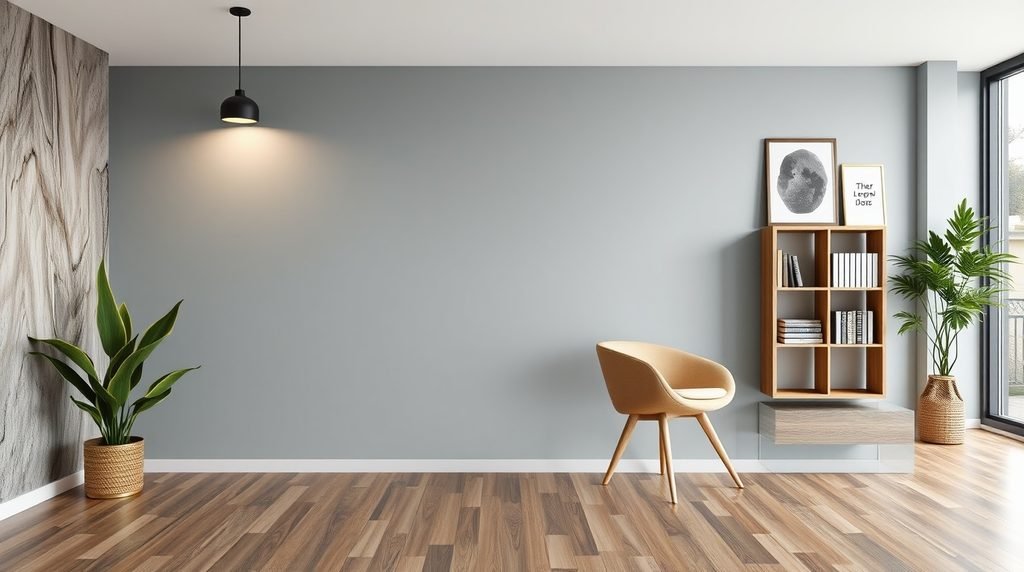
- Ambient light: the overhead or general room light
- Task light: a reading lamp, under-cabinet strip, or desk light
- Accent light: a picture light, plug-in sconce, or LED strip behind furniture
A room with all three layers looks intentional even with inexpensive furniture. A room with only ambient light looks unfinished even with expensive furniture.
Material Contrast
A woven throw, a rough clay pot, a soft rug, and a wood-grain side table create tactile richness that no single surface can achieve alone. This is one of the most underused tools in home design because it costs almost nothing — it’s about mixing what you already have differently, not buying more.
Negative Space
Empty space is a design decision, not a failure to fill the room. A shelf that isn’t fully loaded, a wall with one piece of art instead of five, a corner left open — these choices give the eye somewhere to rest and make the styled areas hit harder.
Designmode24 Interior Design by Room
Generic advice is where most articles on this topic stop short. Here’s what designmode24 interior design looks like applied room by room.
Living Room
The living room carries the most furniture and the most scale risk. Start with the sofa footprint rule above, then work outward.
- Keep a minimum of 30 inches of walking clearance around the main seating area
- Use a rug large enough that at least the front two legs of every major piece sit on it — a rug that only the coffee table touches makes the whole layout look disconnected
- Add one accent light source behind or beside the sofa for evening use
- Mix at least three materials in the soft furnishings: one woven, one smooth, one textured
Bedroom
Bedrooms fail on light layering more than any other room. A single ceiling fixture on a bright setting is the wrong lighting for a space meant for winding down.
- Add a dimmer or a warm-temperature bulb (2700K or lower) to the main fixture
- Use two bedside lamps instead of one to balance the room visually
- Keep nightstands within reach without matching exactly — a matched pair looks catalog-staged, a coordinated-but-different pair looks lived-in
Kitchen
Kitchens are function-first, but designmode24 interior design still applies through material contrast and task lighting.
- Under-cabinet lighting solves the single biggest task-light gap in most American kitchens
- Open shelving works only if styled at roughly 60% capacity — fully loaded shelves read as clutter, not display
- Introduce one warm material (wood, rattan, ceramic) to offset hard surfaces like stone counters and stainless steel
Home Office
- Position the desk perpendicular to, not facing, the main light source to cut screen glare
- Add a task lamp even in a room with good natural light — video calls and evening work need it
- Use vertical storage instead of floor-level filing to protect negative space in small rooms
Small Bathroom
- Swap a single vanity light for two sconces at eye level — this is the single highest-impact, lowest-cost change in small bathrooms
- Use a large mirror to extend perceived negative space
- Add one textured element (a woven bath mat, a wood stool) to break up hard, reflective surfaces
Designmode24 Interior Design on a Budget: Three Tiers
Cost is where most guides get vague. Here’s what designmode24 interior design actually costs at three real budget levels.
| Budget Tier | Typical Spend | What It Covers | Best For |
|---|---|---|---|
| Refresh ($150–$300) | Throw pillow covers, one accent lamp, a console table swap | One room, cosmetic layer only | Renters, quick seasonal updates |
| Room Upgrade ($800–$1,500) | New rug, layered lighting, one statement furniture piece, textiles | One full room, function + style | Homeowners updating a single space |
| Full Room Rebuild ($3,000–$6,000) | New sofa or bed frame, full lighting plan, rug, art, storage | Complete room from empty | Post-move-in or major renovation |
At the lower end, the highest-return purchases are almost always lighting and textiles — not furniture. A $40 lamp changes a room’s feel more than a $400 side table does.
Rental vs. Homeowner: What Changes
This is the split most competing guides skip entirely, and it matters because roughly a third of US households rent.
Rental-friendly moves:
- Plug-in sconces instead of hardwired fixtures
- Command-strip picture ledges instead of drilled shelving
- Peel-and-stick backsplash or removable wallpaper for accent walls
- Furniture-based room division instead of built-ins
Homeowner-only moves:
- Hardwired lighting layers, including recessed and under-cabinet
- Structural layout changes (removing or adding walls)
- Built-in storage and shelving
- Permanent paint and wallpaper on every wall, not just approved accent walls
If you’re renting, roughly 15 of the 20 tips in this guide still apply without needing landlord approval — the rest can wait until you own the space.
Common Mistakes in Designmode24 Interior Design
- Buying furniture before measuring the room. This is the single most common and most expensive mistake — a sofa that doesn’t fit can’t be fixed with styling.
- Matching everything exactly. A fully matched furniture set looks like a showroom, not a home.
- Relying on one light source. Covered above, but worth repeating: this is the fastest, cheapest fix most rooms need.
- Filling every surface. Negative space gets sacrificed first when people are excited to decorate, and it’s usually the first thing to cut.
- Chasing trends over function. A trend-driven purchase that doesn’t fit how you actually use the room has a short shelf life regardless of how current it looks.
Tools That Help
- A tape measure and painter’s tape for the scale-mapping step
- A free room-planning app (most major retailers offer one) to test furniture placement before buying
- A lightbulb color-temperature reference card to keep lighting consistent across a room
- A simple spreadsheet to track the budget tier you’re working within, so impulse purchases don’t push a $300 refresh into $800 territory
Frequently Asked Questions
What is designmode24 interior design?
It’s a practical design method built around four decisions — scale, light, material contrast, and negative space — rather than a single fixed aesthetic style.
Is designmode24 interior design expensive?
Not necessarily. A single-room refresh can run $150–$300, and many of the highest-impact changes, like adding a second light source, cost under $50.
Does designmode24 interior design work for rental apartments?
Yes. Roughly 15 of the 20 core tips in this method use no drilling, no paint, and no landlord approval, making it renter-friendly by default.
What’s the biggest mistake people make with designmode24 interior design?
Buying furniture before measuring the room. Scale problems can’t be styled away after the fact.
How long does a designmode24 interior design refresh take?
A single-room refresh at the lowest budget tier typically takes a weekend, including shopping and setup.
Do I need a professional designer to apply this method?
No. The framework is built to be self-guided — a tape measure, one weekend, and a clear budget tier are enough to apply it to most rooms.
Final Thoughts
Designmode24 interior design works because it replaces vague trend-chasing with four questions you can actually answer: is the scale right, is the light layered, is there material contrast, and is there enough negative space left to breathe. Apply those four questions room by room, match your budget to one of the three tiers above, and skip the mistakes list — that’s the entire method, without the guesswork most guides leave in.




One Reply